
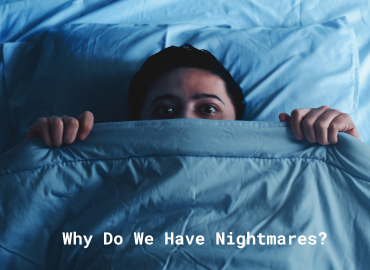
Why Do We Have Nightmares?
You’re falling from a great height, limbs flailing, screaming without a voice. You’re fleeing from a horrible monster, yet your legs move as though you’re slogging through deep mud. You’re called up in front of a crowd to give a presentation, only to find you’re completely unprepared. Someone you love is in peril and you are unable to help. These are all familiar plot lines to the nightmares we experience. Sometimes they make sense, sometimes they don’t.
The problem of nightmares and unpleasant dreams has haunted humanity for thousands of years. Dreaming is closely tied to the basis of human sleep and the brain’s level of consciousness during sleep. It is unclear when Homo Sapiens first began to have dreams of the sort we now recognize today, with pictures and words we can interpret instead of abstractions. Documented records of dreams and the details of what is seen and heard go back many centuries.
The earliest records we have of dreaming and wondering why we dream about certain things go back to around 2500 BC, when a Sumerian priest-king named Gudea recorded his dreams in cuneiform. He wrote of seeing a winged man and huge, lion-like monsters with a message that he must build a temple. He attributed this to a command from the warrior god Ningirsu, and built the E-Ninnu temple, in which were preserved the Gudea cylinders, some of the oldest texts in the Sumerian language. All because of a vivid, likely frightening dream.
Around 2100 BC, an Egyptian man named Heni wrote to his father concerning a nightmare he had about a household servant staring at him intently. He cautioned his father against that person, worrying that he might be harmed. Even today, we can relate to the uncomfortable feeling of being intently observed by someone with unclear motives. Why did he have such a dream? Did he fear this person? Did he fear for his father for a different reason? Was there a guilty conscience involved? Had the beer he had with the previous night’s dinner gone off? Did anything ever come of the dream? We’ll probably never know.
While these may be some of the oldest remaining texts describing someone’s dreams, there is
undoubtedly more that may be beneath our feet, waiting to be discovered.
Humans are not the only creatures that dream. There is strong evidence for the presence of dreaming in animals, from mammals, birds, reptiles, and even invertebrates like cephalopods and spiders. From observing their behavior and brain activity during sleep, we can infer dreamlike states and even periods of REM (rapid eye movement) sleep just like we have.
Maybe one day we will learn what they dream of, and whether or not they have nightmares. It
could be that the things that distress them on waking, such as being hunted, make an appearance in their dreams.
Why do humans have nightmares? While we’re not quite clear on the ins and outs of why we
have frightening or unpleasant dreams, we do have some theories.
Nightmares have been linked to factors like stress, anxiety, sleep disorders, medications, and substance use. Our dreams are a reflection of our brains processing experiences and the emotions linked to them, particularly during states of heightened stress. Sleep is an important time for neural processing, during which our brains parse through the stimuli we experience during waking, creating memories, deciding what to remember for use later and what to let filter down into our subconscious.
High levels of stress and anxiety while awake can result in nightmares. The mind does its best to process and resolve the feelings we have while we’re awake. The dreaming mind functions similar to the waking mind where worry is concerned, repeating the anxious thoughts in hope of finding a way to avoid trouble.
Individuals with post-traumatic stress disorder (PTSD) are highly susceptible to nightmares. The PTSD-afflicted brain continuously goes over the traumatizing events, ruminating on them. Even in times of peace, PTSD keeps the brain on high alert, unable to relax, and the dreamer finds themselves fleeing from the same fears they have while awake.
Some sleep disorders have been known to make the sufferer more susceptible to nightmares. Conditions like sleep apnea and insomnia are known to disrupt normal REM sleep and make nightmares more frequent. The interruptions in breathing common to sleep apnea can produce mini-alarms in our system that don’t quite scare us awake, but scare us while still asleep, melding with the information our brains sort through to create nightmares.
Some medications like antidepressants and blood pressure drugs are thought to have nightmares and sleep disturbance as a side effect.
Substance use and abuse is a common source of nightmares, particularly alcohol and psychedelics. They disrupt the production and flow of neurotransmitters like dopamine and serotonin that help keep our moods stable as well as disrupt sleep. Poor quality sleep hampers our brain’s ability to parse through our experiences while sleeping, creating dreams that are jumbled, confusing, and frightening.
Mental health conditions such as depression, anxiety, and schizophrenia disrupt sufferers’ moods and thought patterns while awake and often do not stop when sleep is achieved. Depression is known to disrupt the REM cycle, sometimes forcing sufferers to spend more time
in REM than others do but also spurring early awakening, forcing the unconscious mind into
consciousness without the normal waking sequence.
If you are experiencing nightmares severe and/or often enough that it is disrupting your quality of life, start by seeing your primary physician. Be honest and thorough when describing your sleep habits, mental health, and substance use. They may have recommendations for lifestyle changes or medications to help you sleep better. They can also connect you with specialists for further examinations and tests like sleep studies. To talk to someone about a possible mood
disorder disturbing your dreams, write to us on our website or call (585) 442-6960.