
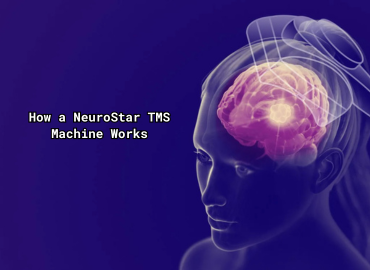
How a NeuroStar TMS Machine Works
NeuroStar TMS (Transcranial Magnetic Stimulation) therapy uses magnetic pulses to stimulate specific areas of the brain that deal with mood regulation and stimulus response, particularly the prefrontal cortex, to help with treatment resistant major depressive disorder (MDD). The magnetic fields induce electrical currents in the brain, activating neurons and potentially releasing neurotransmitters involved in mood regulation. This treatment aims to revitalize underactive brain regions and improve mood. It is a non-invasive procedure, meaning it doesn’t require surgery or incisions. The following is a more detailed explanation.
NeuroStar TMS therapy uses a magnetic coil made of copper, similar to those in MRI machines, to deliver focused magnetic pulses to the brain. The coil is placed against the patient’s scalp, with no shaving needed. When electricity is passed through the coil, it generates a magnetic field. This magnetic field is pulsed rapidly, creating surges that harmlessly penetrate the skull and reach the brain. The magnetic pulses induce small electrical currents in the brain tissue, stimulating nerve cells (neurons) in the targeted area. This stimulates cell activity, cell communication, and cell production. By stimulating this area, TMS can help restore normal activity in circuits that are underactive in conditions like depression.
The magnetic pulses cause neurons to fire, sending signals to other brain cells. This stimulation can lead to changes in brain activity, potentially improving communication between different brain regions. In the cases of disorders like obsessive-compulsive disorder (OCD) and depression, TMS can help “re-train” the brain by strengthening pathways associated with positive mood and reducing the activity of those associated with negative emotions.
These electrical currents stimulate neurons, potentially releasing neurotransmitters like serotonin, dopamine, and norepinephrine. Repeated stimulation can promote neuroplasticity, helping to strengthen neural connections and improve brain function.
NeuroStar TMS is indicated for the treatment of major depressive disorder in adults who haven’t found sufficient relief from antidepressant medications. TMS is a non-invasive procedure, meaning it doesn’t involve surgery or anesthesia, and patients can typically return to normal activities immediately after treatment.
TMS therapy typically involves a series of treatment sessions, often spread over several weeks. A typical treatment session lasts 20-40 minutes, and patients usually undergo 5 sessions per week for 4-6 weeks. During a session, the patient sits in a comfortable chair while the coil is positioned on their head. The machine delivers magnetic pulses for a set duration, and the patient may feel a tapping sensation on their head. Check out more about what you can expect
from a TMS session at this link. To learn more about TMS and other options for treating conditions like depression and OCD, contact us via our website or call (585) 442-6960.